
Here’s what I think.
Most divers don’t struggle with cameras. They struggle with everything around the camera.
You know the feeling. You come back from a great dive, visibility was decent, marine life showed up, vibes were good… and then you look at your footage. It’s shaky. Too blue. Half the shots are unusable. And suddenly you’re wondering if filming underwater is just harder than it looks.
I’ve been there. More times than I’d like to admit.
You won’t believe this, but the turning point for me wasn’t a new camera or better lights. It was realising that underwater video isn’t about gear first. It’s about process. How you plan the dive. How you move. How you frame. And what you actually do with the footage once you’re back on land.
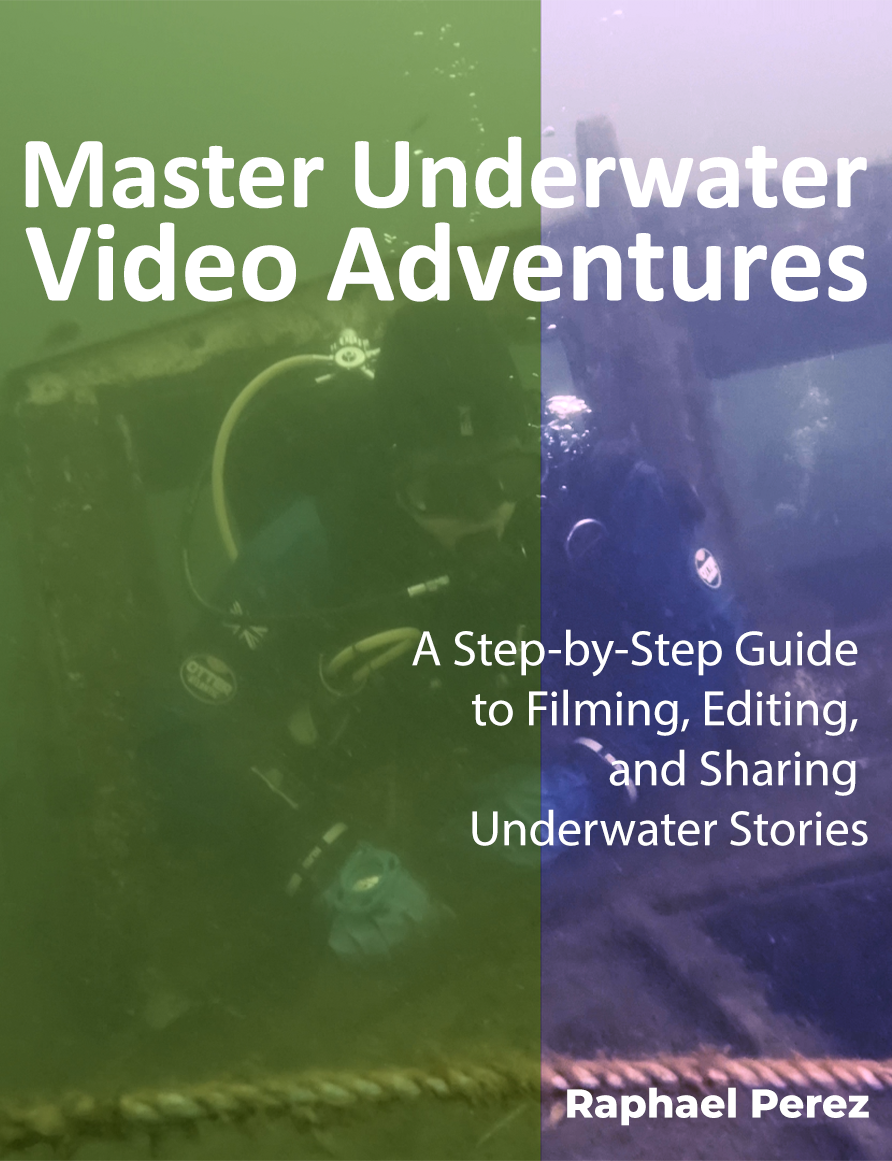
That’s why I wrote Master Underwater Video Adventures.
This book came directly from my own learning curve. From flooded housings, badly trimmed rigs, overpowered lights, forgotten shots, and edits that went nowhere. I didn’t want another book that throws specs and theory at you. I wanted something that feels like a dive buddy leaning over and saying, “Alright, slow down, here’s how to make this easier.”
We start with the basics, but the real basics. How to set up your GoPro or mirrorless rig so it doesn’t fight you in the water. Why buoyancy matters more than resolution. Where to put your lights so backscatter doesn’t ruin everything. And why being patient usually gets you better footage than chasing anything.
Then we talk about storytelling. Not Hollywood stuff. Simple story shapes you can actually use on a reef, a wreck, or a shore dive. What shots matter. Which ones you’ll use in every edit. And how a 60-second video can feel intentional instead of random.
Editing gets covered too. But calmly. Simple colour correction. Matching cameras. Clean exports. Sharing your video so it actually looks right on Instagram, YouTube, or wherever you post. No fancy LUTs. No shortcuts that fall apart later.
And yes, there are checklists. Real ones. Pre-dive, post-dive, travel, flooded gear, planning a shoot. The kind of stuff that stops small mistakes from snowballing. Because underwater filming already has enough variables, right?
If you’re a diver who’s been thinking, “I want to film, but I don’t want it to take over my dives,” this book is for you. And if you’re already filming but feel like your results don’t match the experience you’re having underwater, you’ll probably recognise yourself in these pages.
So yeah. That’s why this book exists.
Not to make you a filmmaker overnight. But to help you come back from a dive thinking, “That actually worked”.
What do you think?
What’s the one thing that always trips you up when filming underwater?