
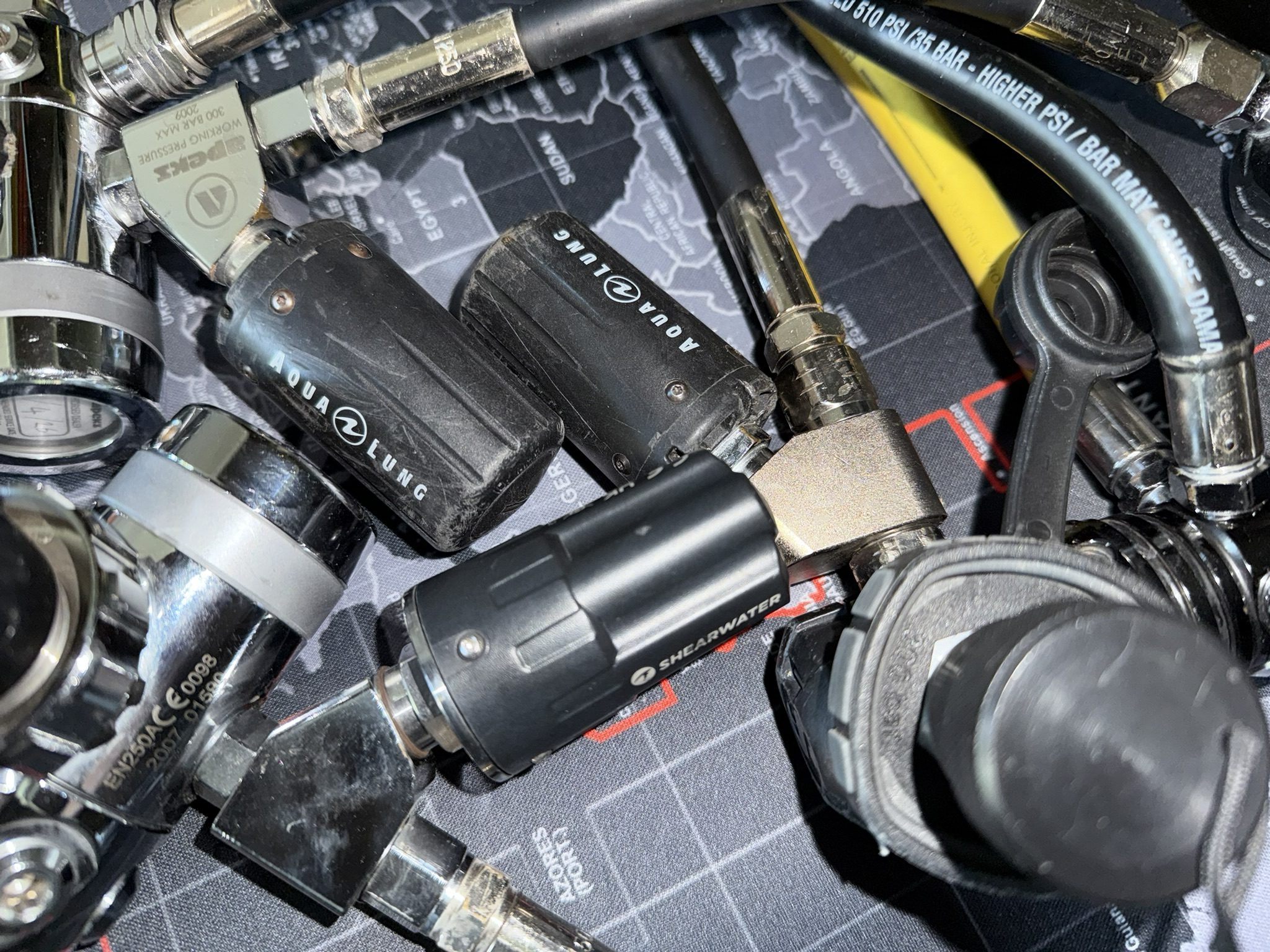
Hey buddy — quick one. You know how we’re always juggling depth, time, gas, current, your buddy’s camera, and that sneaky lobster under the ledge? Now imagine your wrist computer quietly feeding you live tank pressure and Gas Time Remaining (GTR). Pretty sweet. But is air integration (AI) a must-have, or a shiny extra? Here’s what I think after digging through a stack of videos, blogs, and forum threads — plus my own time behind the counter and on the boat.
The 10-second take
If you’re a recreational diver who values simple, streamlined dives and smart post-dive data, AI is a legit upgrade. If you’re budget-tight, already disciplined with gas checks, or diving complex/technical profiles, an SPG backup (or SPG-only) still makes a ton of sense. What do you think?
What AI actually gives you (beyond cool factor)
- One-glance awareness. Pressure, depth, NDL/deco info and GTR on one screen. That reduces load – especially when the viz is meh or the task load goes up. Modern computers calculate GTR from your current SAC at your current depth, then update it as your breathing changes. So if you start kicking into surge, your GTR drops now, not later.
- Streamlined kit. Fewer dangly gauges = less drag and fewer snags. You can keep a short, clipped SPG as a tidy backup (lots of folks do), but you’ll check your wrist 95% of the time.
- Better debriefs. Auto-logging start/end pressures and consumption lets you track SAC over time. You’ll see how current, cold, or stress spikes your gas use and plan smarter. Divers rave about this part. Can you imagine dialling in weighting and trim with real numbers, not vibes?
But let’s be honest: trade-offs and “gotchas”
- Batteries & pairing. Transmitters use user-replaceable cells (common ones are CR2). Check status before trips and carry a spare – swapping is simple. Also, pair your PODs properly on the surface and don’t leave it until the backroll moment.
- Signal collisions used to be a thing. On crowded boats, early units occasionally cross-talked. Newer designs (e.g., Shearwater SWIFT) use collision-avoidance so multiple transmitters can chat reliably at once.
- Brand quirks exist. Many brands share Pelagic Pressure Systems (PPS) transmitters (look for FCC ID: MH8A) so they cross-work; others are closed ecosystems (e.g., Garmin). Suunto also has older analogue and newer digital “Tank POD” flavours that aren’t cross-compatible. So, check your ecosystem before you buy.
- Cost. A transmitter adds real money vs. a £40-£60 SPG. Lots of divers still keep an SPG as a simple, bombproof backup – especially when the dive has higher consequences.
Common arguments
- Pro-AI: “Game changer for awareness and logs; love seeing GTR and post-dive graphs.” (Plenty of experienced voices echo this.)
- Skeptic: “Nice luxury, not essential; keep an SPG if you’re not religious about maintenance.”
- Middle path: “I run both – AI for convenience; SPG so a dead battery isn’t a ruined dive.”
If you want a strong pro-AI take, Scuba Diver Magazine literally titled a video “EVERY Diver Should Use Air Integration”. Worth a look for the counterpoint.
What’s your vibe?
Sidemount & twins: special sauce (and common mistakes)
Running two (or more) cylinders? AI can still work great — but routing and protection matter.
- Don’t let transmitters become tank handles. Protect them, avoid sticking them proud where crew grab. (I’ve seen too many lifted by the transmitter… ouch.) Store them padded and mind the threads.
- Use smart routing or HP splitters if you want a full-size SPG and a transmitter on each first stage. Skip “button” gauges; they’re hard to read and easy to forget.
- Expect a learning curve. Good sidemount AI setups exist – just don’t clutter your under-arm area. I’ve got practical YouTube video if you want a visual.
Setup & care
- Pair at home, pressure-check on the boat. Pressurise, verify each POD serial on the wrist, and confirm live pressure. Don’t wait until you’re drifting off the line.
- Battery hygiene. Replace before big trips; carry a spare cell and tiny O-rings. Do a quick pre-dive blink/LED check to see if your unit has it.
- Keep a compact SPG (at least at first). Clip it short on the left hip. If the transmitter drops out mid-dive, you’ve got numbers without drama. The “belt-and-braces” crowd sleeps better.
- Know what GTR means — and doesn’t. It’s based on your current breathing at current depth and usually assumes a standard reserve. If you go into required deco, many computers blank GTR; you still need solid gas planning.
- Mind ecosystems. PPS/MH8A gear plays nicely across several brands; Garmin is its own world; Suunto Tank POD (digital) is its own thing. Mix-and-match carefully.
Buying quick-tips (no brand wars, just patterns)
- If you want “set-and-forget” reliability in a busy environment: look at transmitters with collision-avoidance (e.g., SWIFT). It’s built for multi-transmitter, boat-crowded scenarios.
- If you’re budget-savvy: get a computer that’s AI-ready and add the transmitter later.
- If you dive Suunto: note the analogue vs digital Tank POD generations; pair/re-pair behaviour can differ from PPS units.
So… should you get AI?
Here’s my friendly decision cheat-sheet:
- Yes, jump in if you’re mostly recreational, love clean kit, want better awareness and love crunching logs after dives.
- Maybe later if your budget’s tight or you’re already super diligent with gas checks and happy with a simple SPG.
- Yes, but keep an SPG if your dives have higher consequences (cold, current, overhead, deco), or you’re the “no surprises” type.
Either way, your skills matter more than your silicon. AI is a multiplier for good habits, not a substitute for them.
Common beginner mistakes (and the fixes)
- Not analysing the tank yourself -> Always analyse, label FO2 + MOD, and sign the fill log if required.
- Forgetting to set the computer -> Make “FO2 set?” part of your pre-dive check – every dive.
- Chasing depth on rich mixes -> Higher O2 = shallower MOD. Respect it absolutely.
- Assuming Nitrox = safer in all ways -> It reduces nitrogen loading but adds oxygen-toxicity risk and fire hazards during blending/handling. Training + procedures keep you safe.
Final thought
You won’t believe this, but the biggest “AI failure” I still see isn’t tech – it’s people forgetting to pair, pressure-check, or swap a £4 battery. Fix those basics, and AI feels like cheating (the good kind). What’s your next step – trying a transmitter on your next trip, or staying analogue for now? What do you think?